What Should You Expect From a High-End Professional Vehicle Protection Consultation?
Protecting the paint on a car you care about isn't a snap decision. There's film, there's coating, there's correction, and each one comes in more than one version. That's a lot to sort out on your own. A good consultation clears it up. It's the conversation where someone looks closely at your car, asks what you want from it, and helps put together a plan that actually fits. With professional vehicle protection, that first conversation plays a big part in how things turn out. It shapes what goes on the car, where it goes, and why. So what should happen during that visit? Let's go through each part, from the paint inspection all the way to the service plan, along with what a good provider should and shouldn't push.
What a Protection Consultation Is Really For
A consultation should feel like a fact-finding visit, not a sales pitch. Both sides come away knowing more.
You learn what your car needs, and the provider learns what you want. Put those together and you get a plan instead of a guess. A good consultation should cover:
- The current condition of your paint
- Your goals for the car's look and protection
- PPF coverage and finish choices
- Whether a ceramic coating makes sense
- Any defects that need attention first
- A clear plan that ties everything together
Inspecting the Paint Up Close
Everything starts with the paint. What's on the surface right now decides a lot about what comes next.
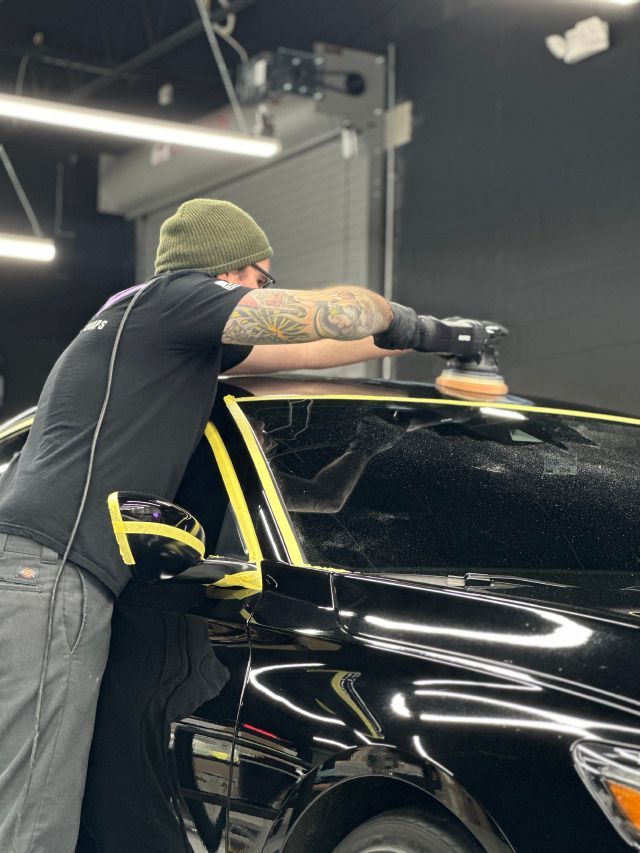
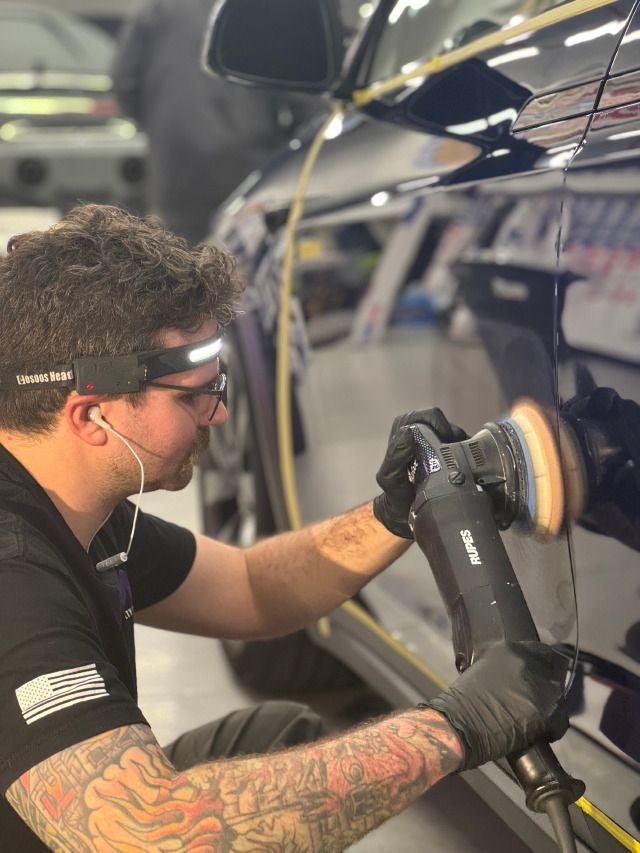
At Automotive Specialty Wraps, paint correction begins with evaluation and prep. That check is where dullness and surface defects in the clear coat get spotted. A careful inspection should look at:
- Areas where the paint has lost clarity
- Surface defects sitting in the clear coat
- Bug splatter, bird droppings, tar, or other bonded grime
- Any film or coating already on the car
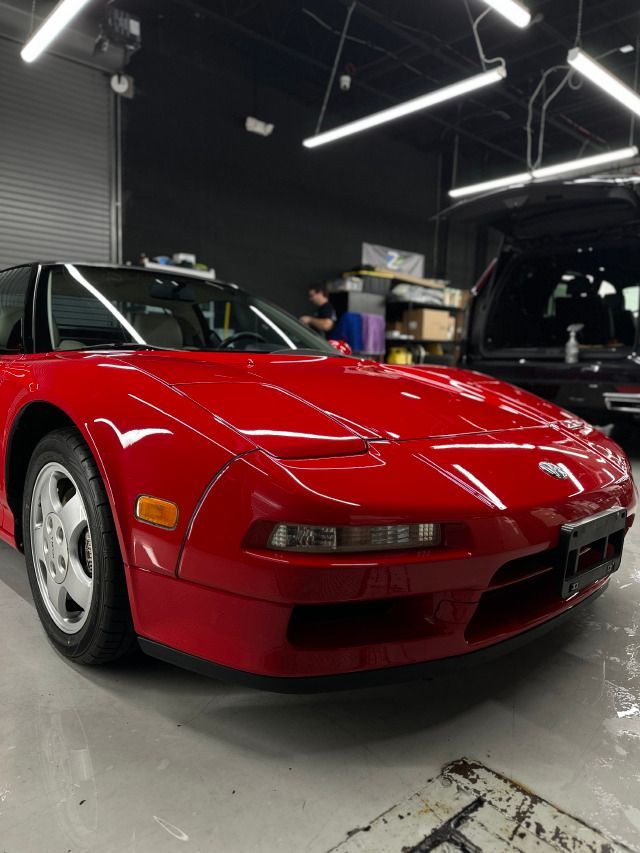
Don't be surprised if a newer car gets the same close look. Paint correction can help even a car that's fresh from the dealer. Catching a flaw early means it can be addressed before protection goes on top of it.
Understanding Your Goals
The paint tells half the story. Your plans for the car tell the other half.
Two owners with the same model can want very different things. One wants the factory finish kept exactly as it is. Another wants a new color. A good consultation asks questions like these:
- Do you want to keep the factory look or change it?
- Is this a daily driver or a weekend car?
- What bothers you most right now: dull paint, defects, or upkeep?
- How much of the car do you want protected?
- How much time do you want to spend washing and caring for it?
There are no wrong answers here. The point is that your priorities steer the plan, not the other way around. Being honest about how you actually use and care for the car helps more than giving the answer you think sounds right.
Discussing PPF Coverage and Finish Options
Paint protection film comes in different amounts of coverage and different looks. This part of the talk sorts out both.
The shop's paint protection film packages scale from partial front coverage up to the full vehicle:
- Front End Essentials: Front bumper, headlights, and mirrors, with partial hood and fender coverage
- Front End Protection: Complete hood and fender coverage, A-pillars included
- Front End + Impact: The front end package, extended down to the lower rockers and back to the rear-quarter impact zones
- Full Vehicle Coverage: Protection for the entire vehicle
Then there's the finish. Clear film keeps the factory paint in view. Matte film creates a low-sheen, flat finish. Color-change film swaps the color while still protecting the paint. Your goals from earlier should point you toward one of these pretty quickly.
Assessing Ceramic Coating Needs
Not every car needs the same coating, and some owners pair a coating with film. This is where those choices get made.
The shop works with Gtechniq ceramic coatings, and its team can help match a coating to your needs. Options run from a coating on painted surfaces, wheel faces, and the windshield to fuller packages that also take in door jambs, interior surfaces, and all the exterior glass.
If PPF is part of the plan, the coating conversation shifts a bit. The shop advises putting ceramic coating on top of paint protection film, and it offers a package built around coating PPF. A few questions to settle here:
- Which surfaces should get coated?
- Will the coating go on paint, film, or both?
- How much correction should happen before the coating goes on?
Your answers about upkeep from earlier matter here too, since coatings make cleanups quicker.
Evaluating Existing Defects
Any defects found during the inspection need a plan before anything gets sealed over them. Film and coatings protect what's there, flaws included.
Paint correction works on the clear coat itself, since that's where these defects live. It follows three steps:
- Evaluation and prep
- Cutting
- Buffing and polishing
The amount of correction should match the paint. Lightly worn paint may only need a light pass, while paint with more defects may call for full correction. Depending on the package, the shop's ceramic coating options include a light correction, a single-stage polish, or full paint correction.
Why Professional Vehicle Protection Should Fit Your Priorities
The best plan is the one that fits your car and your goals. That isn't always the biggest package on the list.
Full-vehicle film with the most thorough coating might be exactly right for one owner. For someone who mostly wants the front end guarded on a daily driver, it may be more than they need. A good provider should explain the options, show what each one covers, and let your priorities guide the choice. That's the heart of professional vehicle protection: the right services, for the right reasons.
A few signs the plan was built around you:
- It ties back to what you said about your goals
- It addresses the defects found during inspection
- It explains why each service is included
- It leaves room for your questions before anything is booked
Putting the Service Plan Together
Once everything's on the table, it comes together in a plan. This is what you should walk away with.
A solid service plan usually lays out:
- Any paint correction that needs to happen first
- PPF coverage and finish, if film is part of it
- The coating and the surfaces it covers
- Add-ons that fit your goals, like window tinting with LLumar or SunTek film, or interior PPF
Prep comes first, because the surface has to be ready before any protection is applied. Seeing the order laid out helps you understand how each piece builds on the last. If something on the list doesn't make sense to you, ask before you agree to it. A good plan should be easy to explain.
Start the Conversation in Fair Lawn
Not sure where to begin?
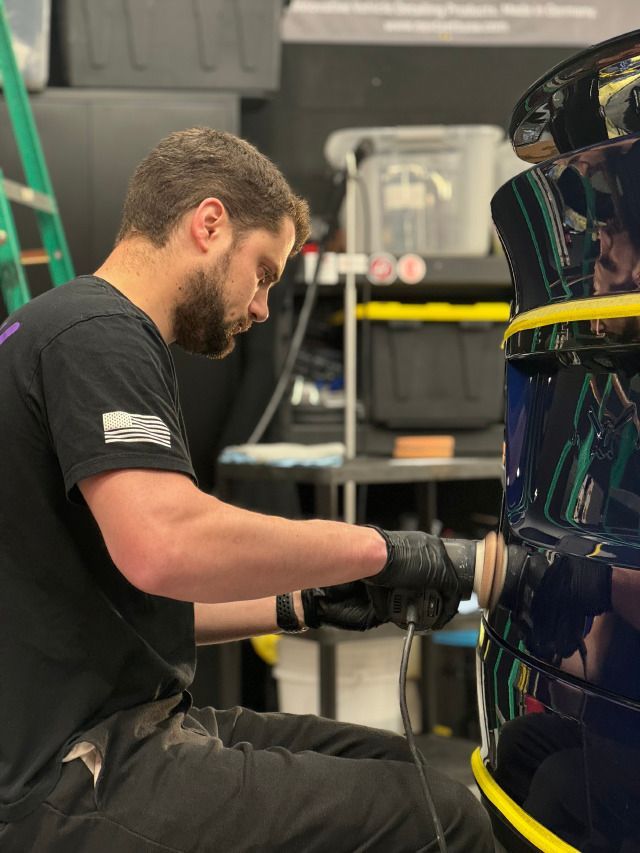
Here in Fair Lawn, NJ, our IDA-certified crew at Automotive Specialty Wraps provides professional vehicle protection through paint correction, PPF, ceramic coatings, and window tinting. Fill us in on your vehicle and your goals through our contact page.
Frequently Asked Questions
Here are some common questions owners have before a protection consultation.
Do I need to know exactly what I want before a consultation?
Not at all. It's fine to start with a rough idea, like wanting the paint protected or the shine brought back. The consultation is where that turns into something specific. Come ready to talk about how you use the car, what bugs you about its current condition, and whether the original finish is staying. A good provider should use those answers, along with the paint inspection, to shape your options.
Should a new car go through a paint inspection too?
Yes. Paint correction isn't only for older cars, and new vehicles can gain from it as well. An inspection shows whether there's anything in the clear coat worth fixing before film or a coating goes on. Since both protect whatever is underneath, it's smart to start with paint you're happy with. If the paint checks out fine, the focus can shift to protection.
Is the biggest package always the best choice?
Not necessarily. The most extensive package covers the most surfaces, but that doesn't make it the right fit for every owner or every car. Someone who wants full coverage and a top-tier coating may find it ideal. Someone else may be better served by front end film and a lighter coating package. The right choice is the one that lines up with your goals and your paint's condition.
Can PPF and ceramic coating be planned together?
Yes. The shop advises coating paint protection film with ceramic, so it makes sense to discuss both in the same conversation. The film handles physical protection on the areas it covers, and the coating brings a slick surface that's easier to clean. Planning them together also helps decide which surfaces get film, which get coating, and which get both layers working as one.
What should I ask during a protection consultation?
Start with the basics. Ask what the inspection found and whether correction is needed before protection. Ask which PPF coverage and finish fit your goals, and which coating suits your car. Then ask why each service in the plan is included. A clear answer to that last question tells you the plan was shaped around your car instead of a standard package.