What Makes a Professional Ceramic Coating Service Different From a Basic Application?
Anyone can wipe a coating onto a car. That part takes a bottle, an applicator, and maybe an afternoon. So why do people pay a shop to do it? Well, the bottle is only a small piece of the result. What happens before the coating goes on, and after, decides how good it looks and how long it keeps working. A professional ceramic coating service covers the whole chain. That means checking the paint, pulling off bonded grime, correcting defects when the paint needs it, prepping the surface, applying the product with care, allowing time to cure, checking the work, and caring for the finish afterward. Skip a step and the coating seals in whatever was wrong underneath. Here's what each stage involves, and what you should expect when you're paying for the full job.
Basic Application vs Full Service: Where They Split
The difference isn't really the liquid in the bottle. It's everything that happens around it.
A basic application usually means a quick wash and a coat of product. A full service handles the coating as the final step of a longer job. Here's how they compare:
- Basic application: A wash, a wipe, and the coating. Whatever sits on the paint gets sealed under it.
- Full service: Inspection, decontamination, correction when needed, surface prep, careful application, curing time, a final check, and aftercare.
Think of it like painting a room. You can roll fresh paint over dirty walls with dents, and it'll look fine from the doorway. Up close? Every flaw is still there, just shinier. A coating works the same way because it attaches to whatever clear coat it lands on, good or bad.
Inspection: Looking Before Touching
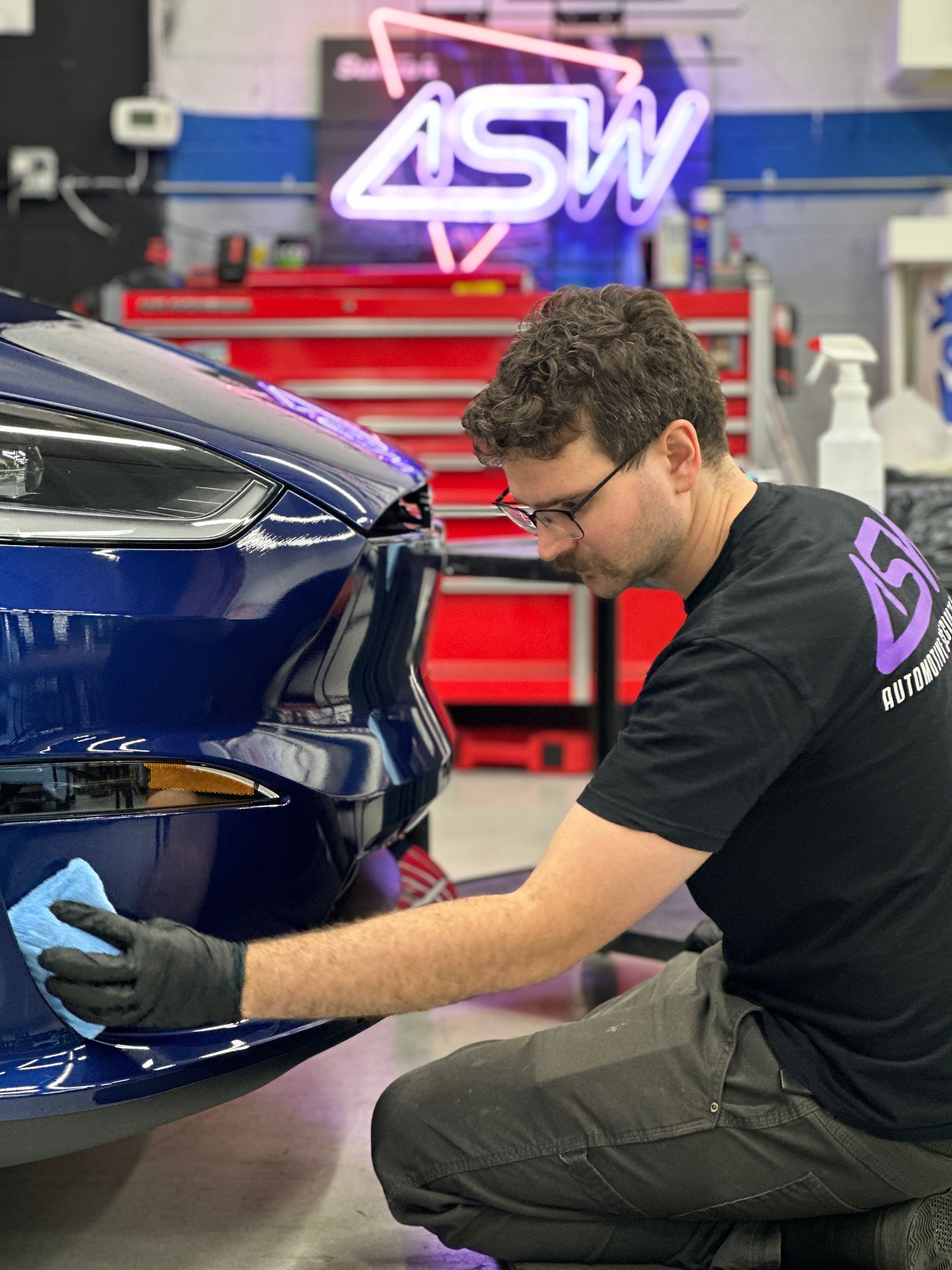
Every good coating job starts with a close look at the paint. This step shows what the car actually needs.
At Automotive Specialty Wraps, paint work begins with evaluation and prep. The crew checks the clear coat for dullness and surface defects, since that's the layer where those flaws sit. That same look helps decide which package fits.
A careful inspection answers a few questions:
- Is the paint healthy enough to coat as it is?
- Are there defects in the clear coat that a coating would lock in?
- Which surfaces should get coated, like paint, wheels, or glass?
- Does the car already have paint protection film that changes the plan?
Here's the thing. Brand-new paint can still gain something from correction, so "it's new" doesn't mean "skip the check."
Decontamination Pulls Off What Washing Misses
A regular wash cleans the surface. Decontamination goes after the stuff that has hardened onto it.
Grime, tar, and bug residue can solidify on paint, and a standard wash won't lift all of it. That's why the shop's coating packages open with a decontamination wash followed by clay bar work, the same steps found in its full detailing packages. The order looks like this:
- Wheels and tires get washed first, so wheel debris doesn't end up back on the paint.
- A two-bucket hand wash cleans the body.
- Decontamination products lift minor bugs, tar, and grime.
- A clay bar pulls out the remaining impurities.
Miss this stage and the coating sits on top of contamination instead of clean clear coat. That's not a good trade.
Paint Correction, When the Paint Calls for It
Correction isn't automatic. It depends on what the inspection turns up.
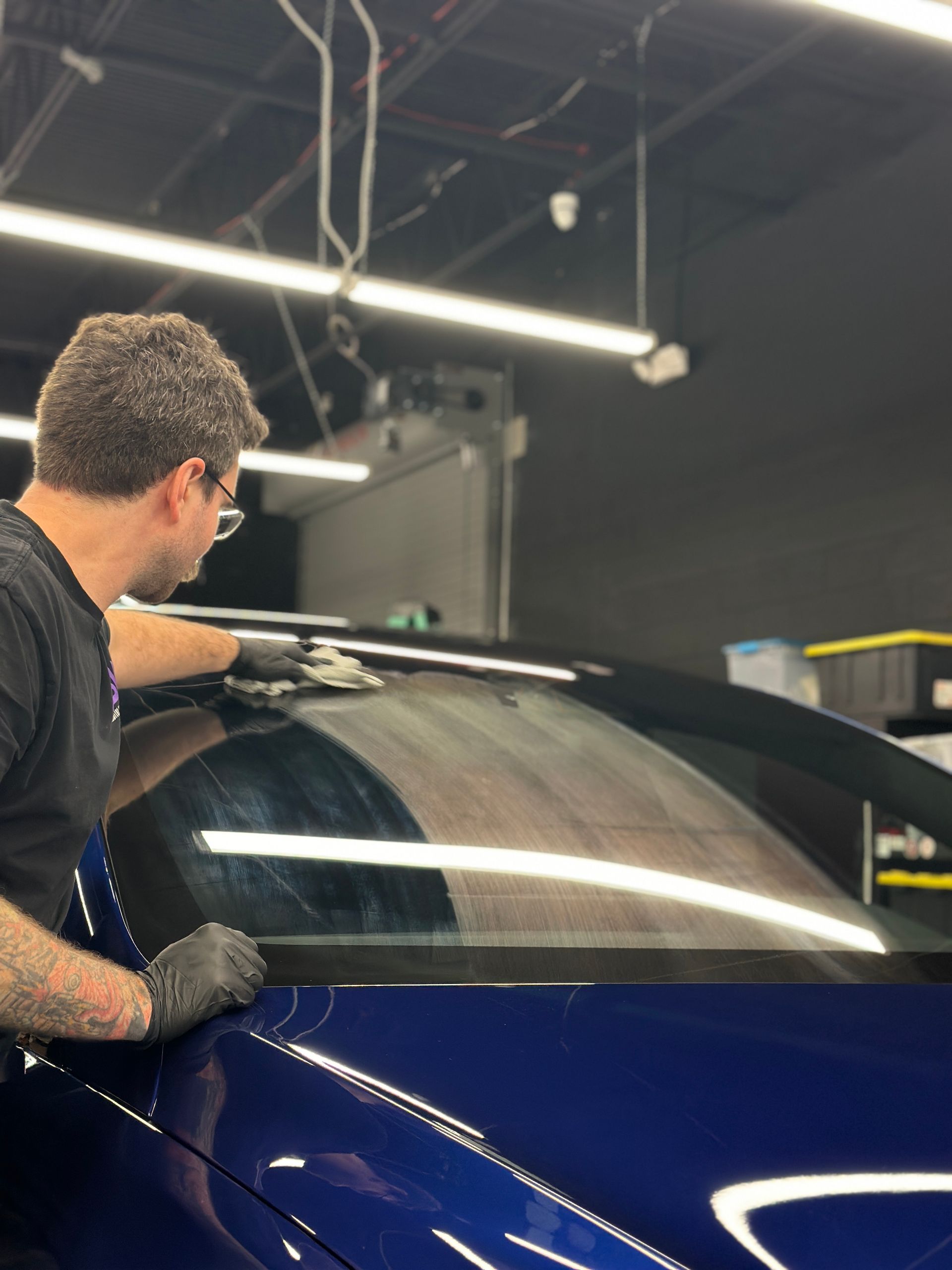
Paint correction takes off a very thin slice of clear coat using a cutting compound on cutting pads. That removes the defects sitting in that top layer. After that, buffing and polishing bring the clarity back. It works on any paint color, too.
Because the coating seals in whatever's underneath, this is the stage where a professional ceramic coating service really earns its keep. Coat dull, marred paint, and you get dull, marred paint with extra gloss. Correct it first and the coating locks in a clean finish.
The shop's coating packages include different amounts of correction:
- A light correction across all painted surfaces
- A single-stage polish
- Full paint correction
Surface Prep: The Last Step Before Product
Once the paint is clean and corrected, it still has to be ready for the coating.
At this shop, prep work exists to get the paint ready for either a ceramic coating or paint protection film. The shop's own blog puts it plainly. Prepping is crucial before a coating goes on.
Why all the fuss? The coating is meant to grip the paint and stay put. Anything left sitting between the two gets in the way of that grip.
Application Technique and Product Choice
This is where training and product knowledge show up. It's about the right coating, applied the right way, on the right surfaces.
Automotive Specialty Wraps is IDA-certified and works with Gtechniq ceramic coatings. The shop's Gtechniq page points to consistent installation and maintenance credentials as part of that work. Credentials matter here because even a good coating depends on how well it goes on. Depending on the package, the lineup can include:
- Gtechniq EXO
- Crystal Serum Light
- Crystal Serum Ultra, paired with Exo Topper
- Wheel Armor for the wheel faces
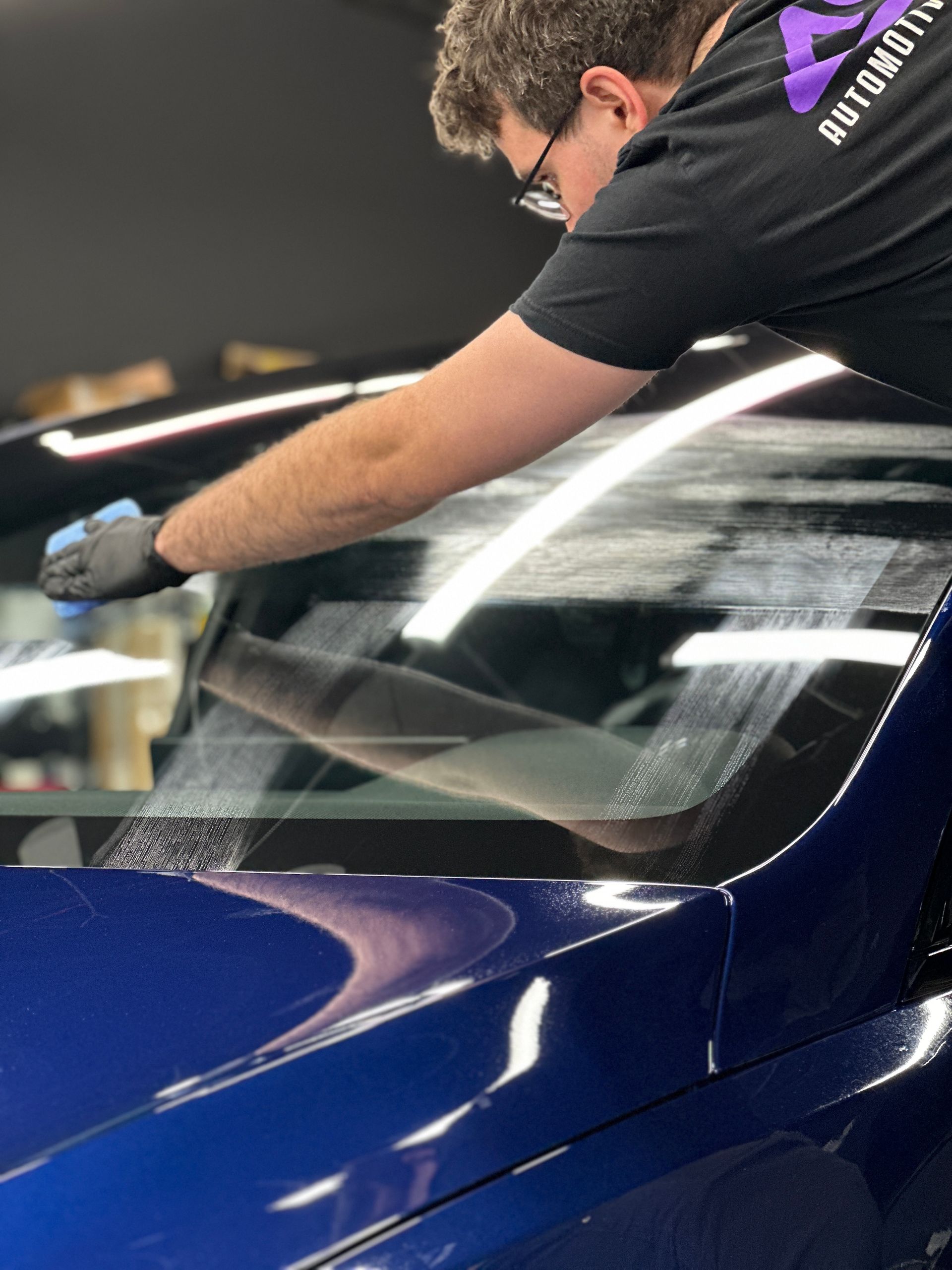
- Glass coating, starting with the windshield
A full service also thinks past the paint. Some packages cover all the exterior glass, interior surfaces, door jambs, and even wheel barrels and calipers.
Curing: Giving the Coating Time to Set
After application, the coating still has work to do. This stage is easy to overlook, but it matters.
The coating bonds with the clear coat to create a long-term gloss layer. That bond is the whole point of the product, so the period right after application deserves attention. Ask your installer what the first stretch after pickup should look like for your specific coating.
Quality Control Before You Drive Off
A final check catches anything that slipped through. It's the difference between "done" and "done right."
The shop describes its mission as eliminating all surface imperfections. When you pick up a coated car, look for:
- Paint clarity that matches what you were told to expect
- Every surface in your package coated, from paint to wheels to glass
- No defects left behind in areas that were corrected
If something looks off, speak up. Bringing it up at pickup is a lot easier than circling back later.
Aftercare Keeps the Coating Doing Its Job
Coatings make care easier, not optional. A simple routine goes a long way.
Coated paint stays slick, so grime lets go more easily in the wash and less of it clings to the surface. Water gathers into tight beads instead of sitting flat. Washes take less effort, and you won't need a full detail as often. Still, New Jersey weather can wear on any coating over time, and the conditions your vehicle sees every day play a role in how long it lasts. A few good habits help:
- Hand wash gently, with a two-bucket method
- Wash the wheels and tires first, so their grime stays off the paint
- Skip abrasive brushes and public car washes, the same care the shop points to for film
What You're Really Paying For With a Professional Ceramic Coating Service
You're not paying for product alone. You're paying for judgment at every step, which is what the shop's ceramic coating packages are built around:
- Knowing when correction is needed and when it isn't
- Removing contamination that washing leaves behind
- Matching the coating to your needs
- Covering more than paint, like wheels and glass
- Giving the coating a clean, prepped surface to hold onto
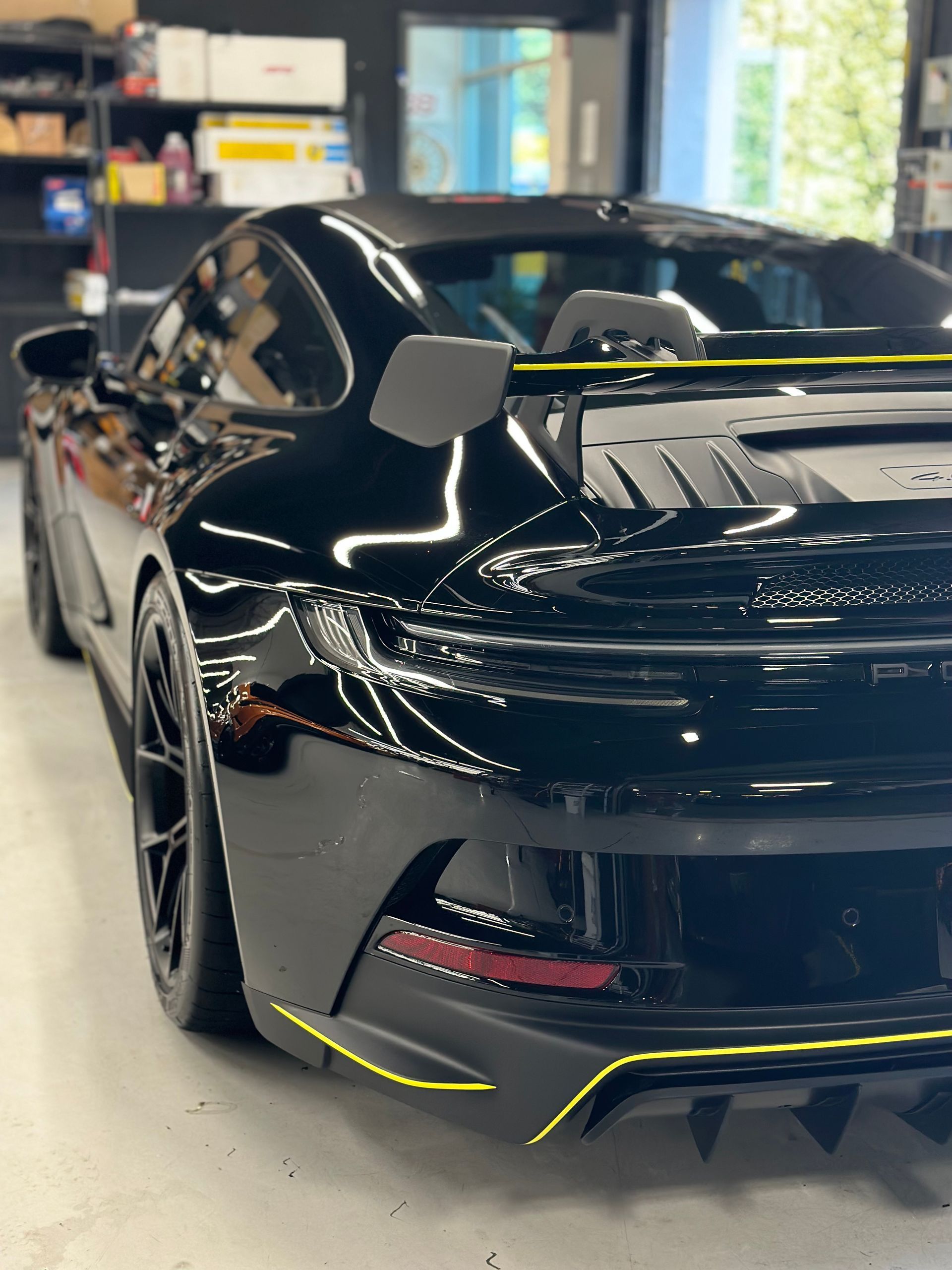
Get Your Paint Assessed in Fair Lawn
Your paint only gets one first coating, so it's worth making it count.
The coating crew at Automotive Specialty Wraps in Fair Lawn, NJ handles each stage of a professional ceramic coating service, from decontamination and correction to Gtechniq application. Use our contact page to start the conversation about your car.
Frequently Asked Questions
These are some of the questions people ask most before booking a coating.
Can a coating cover up defects in my paint?
Not really. A ceramic coating attaches to the clear coat as it is, so dullness and surface defects stay visible underneath. They may even be easier to spot once the gloss goes up. That's why inspection comes first. If the paint has marring or other defects, correction removes a thin amount of clear coat to clean them up before the coating goes on. Then the coating locks in that corrected finish instead of the flaws.
Does a brand-new car still need prep before coating?
Usually, yes. Paint correction can still help a new vehicle, and every car needs a clean, decontaminated surface before a coating goes on. The paint gets inspected either way, and that check shapes how much prep makes sense. It could be a light correction or a single stage polish, along with a decontamination wash and clay bar. Skipping prep on a new car just means sealing in whatever is already on the paint.
Is it safe to put a ceramic coating over paint protection film?
Yes. Automotive Specialty Wraps advises applying ceramic coating on paint protection film for optimal results. The film shields the paint, while the coating adds slickness and shine to the film's surface. The shop offers a full PPF coating package that covers the film along with the wheel faces, all the glass, the headlights, and the taillights. Contaminants have a harder time holding onto coated film, so it's easier to keep clean as well.
Will I still need to wash my car after it's coated?
You will, just with less effort. A coating makes grime easier to remove, so washes go quicker and don't need to happen as often. It doesn't stop dirt from landing on the car in the first place, though. The weather your car faces here affects every coating, so a gentle wash routine is worth keeping. A two-bucket hand wash is a smart habit to build, and it helps keep the finish looking the way it did at pickup.
How do I know which coating package fits my car?
It comes down to your paint's condition and how much coverage you want. Some cars need only a light correction and a coating on the paint, wheel faces, and windshield. Others call for full correction plus coating on the glass, interior surfaces, and door jambs. The inspection step sorts this out. The shop's team can help you choose the right coating for your needs, based on what the paint shows during that check.