
Why Precision Cutting Matters in Professional Window Tint Installation
Have you ever seen a tint job where the film stops a quarter inch short of the rubber seal? Or one with a little wave along the top edge that catches your eye every time you look at the door? That's almost never a film problem. It's a cutting problem. The shape of the film, how it lines up with the glass, and how clean the edges come out all depend on one step most drivers don't think about. Cutting it right is what separates work that looks great for a week from work that still looks dialed in years later.
For drivers thinking about auto window tinting Glen Rock installations, knowing how precise cutting actually works is what helps you tell good craft from rushed work.
The Difference a Clean Cut Makes
Tint film has to fit the glass it's going on. Sounds obvious, but the curves and edges on modern car windows aren't simple. You've got compound curves on rear windows, sharp corners on door windows, and defroster lines that have to be worked around without bubbles or gaps. Get the cut wrong, and the install shows it.
Some of the visible issues that come from sloppy cutting include:
- Gaps along the top edge where the film falls short of the seal
- Lifted edges that peel within months
- Light leaks around the corners at night
- A film that wrinkles or bunches at curved sections
- Uneven coverage between matching windows
None of that is fixable with more squeegee work. Once the film is on, the cut is locked in. That's why the prep and pattern stage is where pro installers spend so much of their time.
Why Pro Shops Use Computer-Cut Patterns
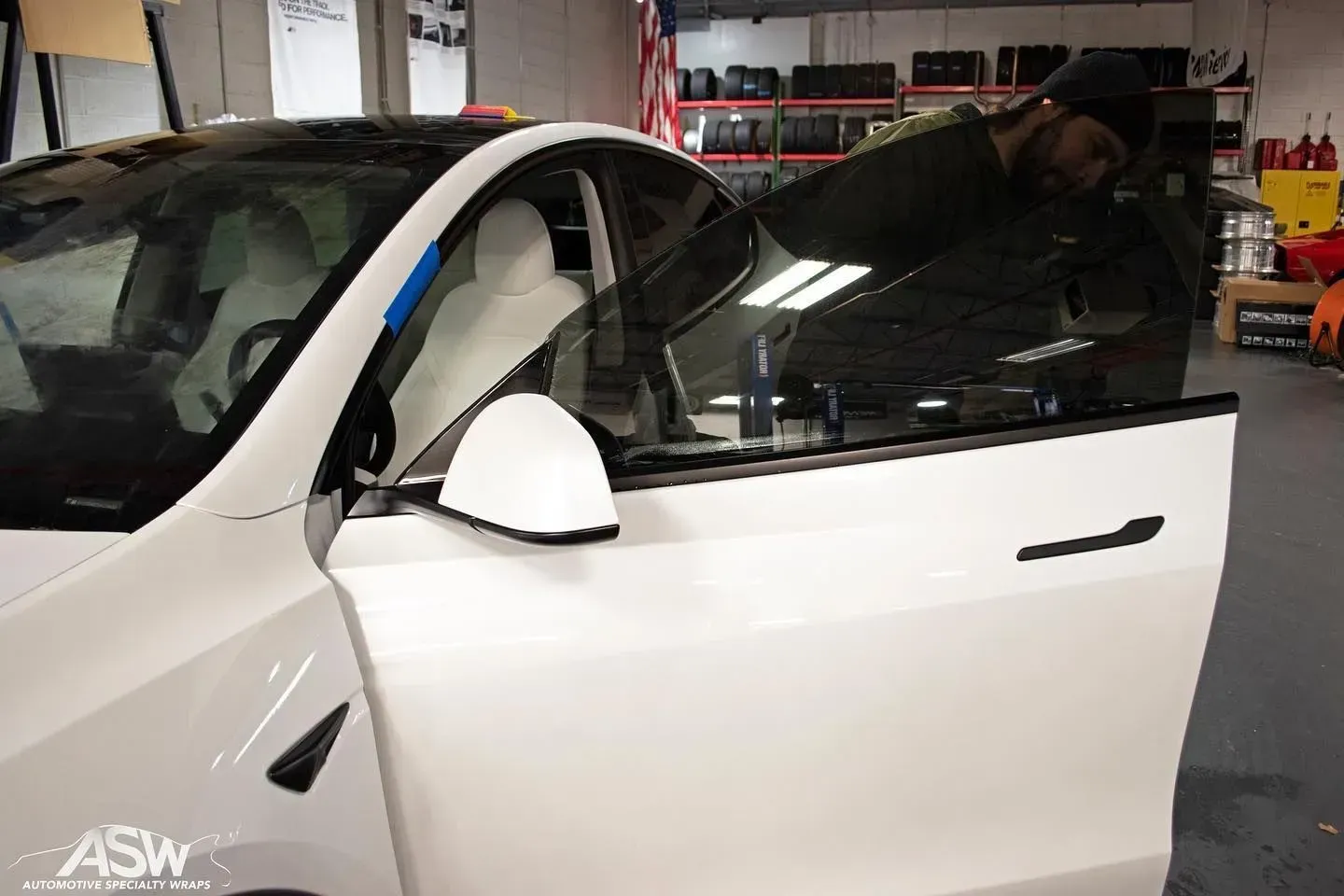
Most quality installers today work off computer-cut templates rather than freehand with blades on the glass. The pattern is loaded into a plotter from a database of vehicle-specific window shapes, and the machine cuts the film to match. This approach offers a few real advantages over hand-cutting on the car:
- No blade ever touches the glass or the surrounding trim
- Every panel comes out matching the exact same shape
- Patterns account for vehicle-specific quirks like compound curves on Teslas and other modern cars
- Cuts are repeatable across multiple windows on the same car
- Edge consistency stays tight even on tricky panels
That last one matters more than people realize. Two rear door windows on the same car should look identical when the install is done. With a plotter, they do. With a freehand cut, you're trusting the installer to nail the exact same shape twice.
Where Hand Skills Still Matter for Auto Window Tinting Glen Rock Installs
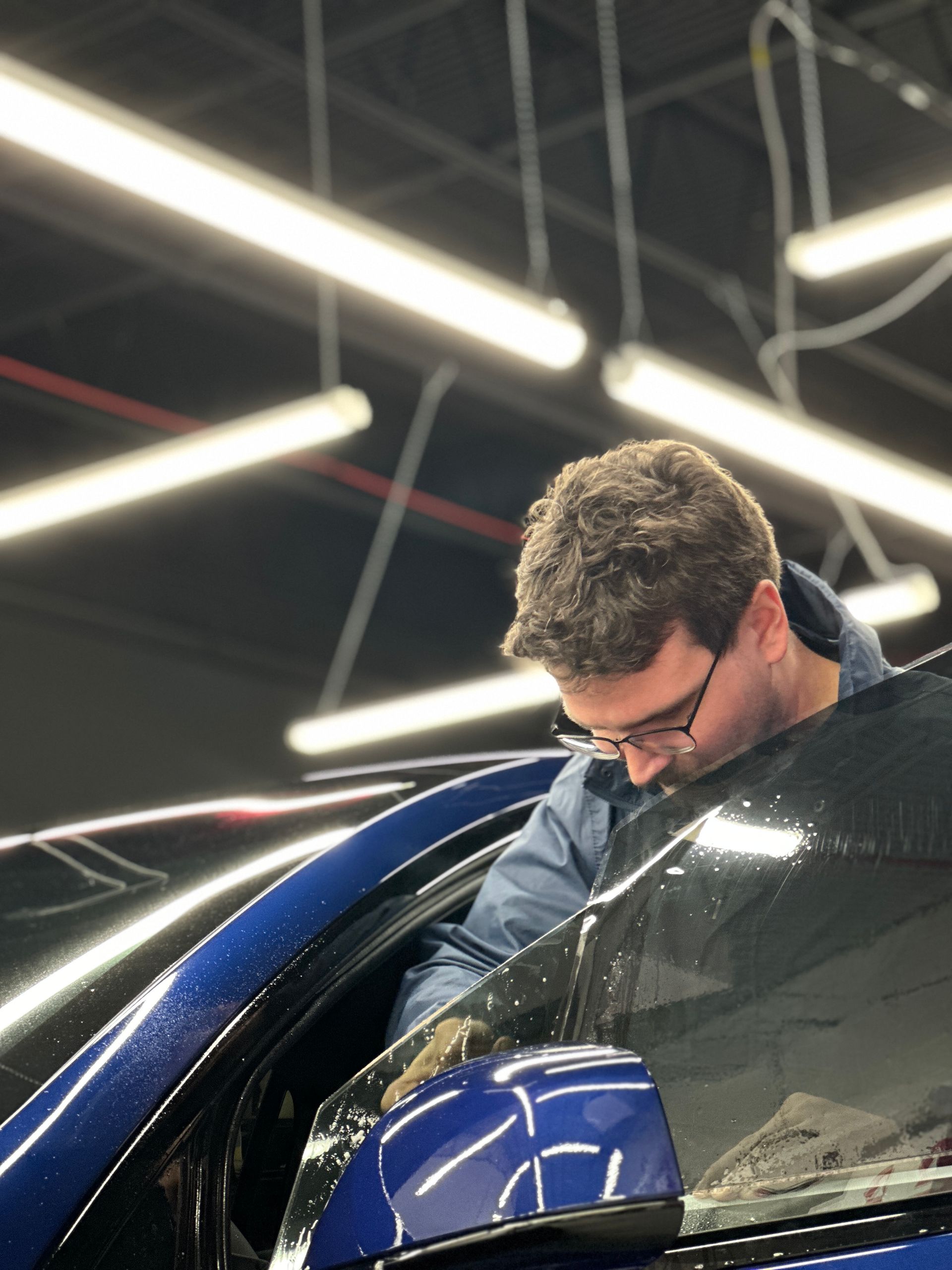
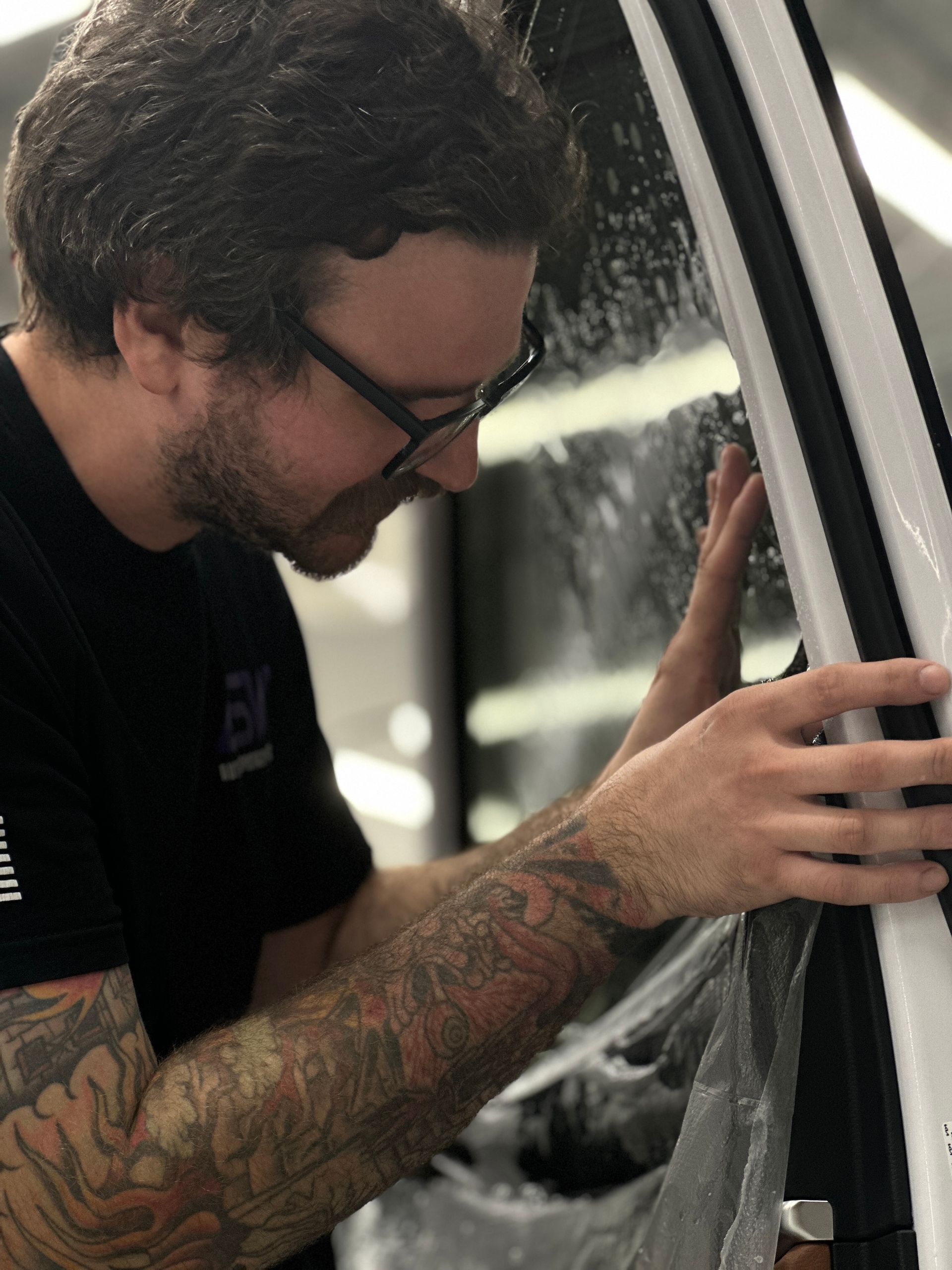
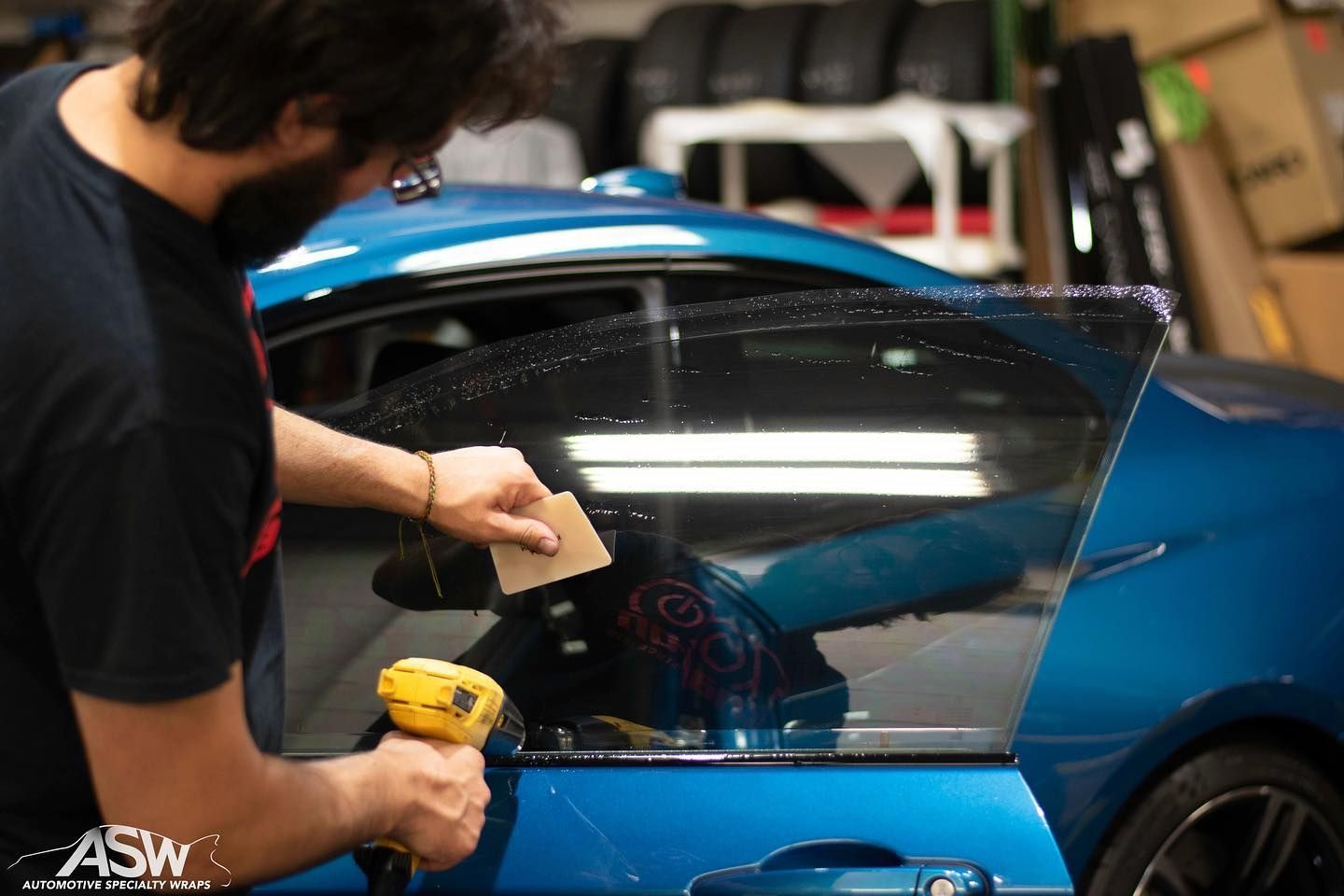
Don't get the wrong idea, though. Pattern-cut film still needs a real installer to handle the rest of the job. Auto window tinting depends just as much on what happens after the cut as the cut itself. The film has to be lifted, sprayed, positioned, and squeegeed onto curved glass without trapping dust or bubbles.
Hand skills come into play in spots like:
- Shrinking film to match deeply curved rear windows
- Tucking edges down into door seals without lifting
- Working around defroster lines on the back glass
- Smoothing out water and air pockets evenly across the panel
- Matching tint percentage and shade across all four side windows
A great installer, like Automotive Specialty Wraps, combines machine-cut precision with the kind of hands-on technique that only comes from years of doing the work.
What to Expect at a Quality Tint Appointment
A real shop walks through the install in a way that makes sense, not a rushed handoff. When you drop your vehicle off for a proper tint job, here's what a quality install usually looks like:
- The installer reviews your vehicle's window shapes and the right cutting approach
- Film is selected based on your shade preference and your state's legal limits
- Each panel is cut to fit before any application begins
- Glass is cleaned thoroughly to remove dust and any contamination
- Film is sprayed, positioned, and squeegeed one window at a time
- Edges are tucked, heat-shrunk if needed, and inspected under good lighting
A good installer won't rush this step. The whole job, done right, takes hours, and that's the point. Quality work shows up in how the finished tint sits flush, edge to edge, with no light leaks or gaps.
How Cut Quality Affects Long-Term Performance
A clean cut doesn't just look better the day you pick the car up. It holds up better over the years, too. Film cut to the right shape, with edges tucked properly into seals, blocks moisture, dust, and UV from creeping in along the perimeter. That means:
- Less risk of edges lifting or peeling
- Better resistance to bubbling along the perimeter
- More consistent UV blocking across the full window
- Cleaner appearance through years of washing and weather
- Easier visibility through windows without distortion lines
By comparison, a film cut a hair short or with rough edges can start showing problems within months. Those problems get worse with every car wash and temperature swing.
Schedule Your Glen Rock Window Tint Appointment
The cutting step is one you can't see in a finished job, but you can spot the difference it makes in a tint install done right. At Automotive Specialty Wraps, our IDA-certified crew handles auto tint work for drivers nearby using premium SunTek films, and the attention and precision work requires. We've been in this scene for over a decade, and every auto window tinting Glen Rock project gets the same care as a car in our own driveway. Curious which tint shade fits your ride? Get in touch with us, and we'll talk it through.
Frequently Asked Questions
Why is computer-cut film better than hand-cutting on the car?
Computer-cut patterns are made from a database of vehicle window shapes that match the glass exactly. The film is cut on a plotter before it ever touches the car, which means no blades come anywhere near your glass or trim. Hand-cutting on the vehicle puts both at risk and depends entirely on the installer's freehand accuracy that day. With pattern cutting, you get repeatable, matching results across all the windows, and the install moves faster since the pieces are ready before work starts.
Can a bad cut be fixed after the tint is installed?
Not really. Once the film is adhered to the glass, the shape is set. If the cut is off, the only real fix is to remove that piece and start over with a fresh sheet. Some minor edge issues can be trimmed carefully after installation, but anything more involved means a full replacement of that window. That's why getting the cut right the first time matters so much and why working with an experienced shop saves you headaches later.
Do all professional tint shops use plotters?
Most quality shops do, but not every one of them. Some smaller operations still hand-cut on the vehicle, which can work in skilled hands but takes longer and carries more risk to the glass. Asking whether a shop uses pattern cutting is a fair question before you book. A shop that invests in plotter technology is usually one that takes consistency and finish quality seriously. It's also a sign that they handle a wide range of vehicles and have the patterns available to match.
How long does precision window tint installation take?
A full vehicle tint typically takes a few hours, with the exact time depending on how many windows, the complexity of the glass curves, and the film type being used. Rear windows with steep curves take longer because they need heat shrinking to match the shape. A shop that finishes a full car in 30 minutes is almost guaranteed to be cutting corners. Real precision work needs time for prep, patterning, and inspection on each panel.
Will precision-cut tint last longer than a rushed job?
Yes, by a wide margin. Films cut to fit properly and tucked into seals have far less exposure to the moisture, dirt, and UV that cause peeling and bubbling. A clean install with crisp edges holds up year after year with normal use. A rushed install with rough cuts often starts showing edge lifting or bubbles within months, and those problems only get worse with time. Cut quality is one of the biggest factors in how long a tint job actually lasts.